Space for Beginners: Easy Guide to Exploring the Universe for Kids
Is your child dreaming of becoming an astronaut? Exploring space can seem overwhelming, but our beginner's guide for kids breaks it all down! From understanding what a galaxy is to learning how rockets launch, this post is the perfect starting point for young stargazers ready to begin their cosmic journey.
⚡ Quick Answer: What is Space Exploration?
Space exploration is the investigation of outer space using spacecraft, satellites, and human missions! From Sputnik in 1957 to Mars missions today, we've launched robots to other planets, landed humans on the Moon, and built space stations. It helps us discover new worlds, develop technology, and understand our place in the universe!
Discover how humanity reaches for the stars and why space travel matters!

🌟 Have You Ever Wondered...
Have you ever looked up at the night sky and wondered what's out there? You're not alone. Humanity's fascination with the cosmos has led to decades of space exploration, unlocking mysteries of the universe and pushing the boundaries of science and technology. Whether you're a curious student, a sci-fi enthusiast, or someone seeking inspiration, this beginner's guide will launch you into the world of space travel.
🧭 What Is Space Exploration?
Space exploration is the active investigation of outer space using spacecraft, satellites, and human missions. Unlike astronomy, which observes from Earth, space exploration involves physically venturing beyond our planet to study celestial bodies and cosmic phenomena.
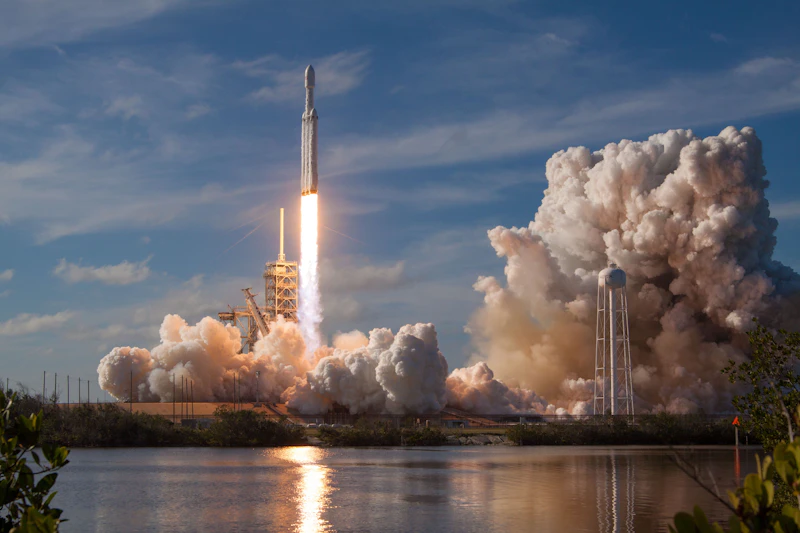
🛰️ How We Explore Space:
- Robotic Probes: Unmanned spacecraft that travel to other planets
- Satellites: Orbit Earth to study our planet and universe
- Space Stations: Homes for astronauts in orbit (like the ISS!)
- Human Missions: Brave astronauts traveling to space
- Telescopes: Powerful eyes in space (like Hubble and James Webb)
From robotic probes to crewed missions, space exploration has revolutionized our understanding of the universe—and ourselves.
📜 A Brief History of Space Travel
Humanity's journey to the stars is filled with incredible milestones. Here are the most important moments:

🗓️ Major Milestones:
- 1957: Sputnik 1—the first artificial satellite launched by the Soviet Union. This tiny beeping ball started the Space Age!
- 1961: Yuri Gagarin—first human in space aboard Vostok 1. He orbited Earth once in 108 minutes!
- 1969: Apollo 11—Neil Armstrong and Buzz Aldrin land on the Moon. "That's one small step for man, one giant leap for mankind."
- 1981: Space Shuttle Program—NASA launches the first reusable spacecraft
- 1998–Present: International Space Station (ISS)—a symbol of global cooperation in space science. Astronauts from many countries live and work together!
- 2020s: NASA's Artemis Program and China's lunar missions aim to establish sustainable Moon bases and return humans to the Moon!
🌍 Why Explore Space?
Space exploration isn't just about cool rockets and astronauts. It has real benefits for everyone on Earth!
Scientific Discovery
Learn about planets, black holes, and the origins of the universe
Technological Innovation
Space missions drive advancements in robotics, AI, and materials science
Global Collaboration
Countries unite for peaceful exploration and shared knowledge
Human Survival
Colonizing other planets may be key to long-term survival
📱 Space Tech in Your Daily Life:
Did you know space exploration gave us:
- GPS (navigation in your phone!)
- Camera phones (tiny camera tech from satellites)
- Memory foam (used in mattresses and pillows)
- Water filters (clean water technology)
- Wireless headsets (Bluetooth technology)
🚀 The Future of Space Missions
The future of space exploration is more exciting than ever! Here's what's coming next:

🔮 What's Next in Space:
- Mars Exploration: NASA and SpaceX are planning crewed missions to Mars. The first humans could walk on Mars by the 2030s or 2040s!
- Space Tourism: Companies like Blue Origin and Virgin Galactic are making space travel accessible to regular people (not just astronauts!)
- Asteroid Mining: A potential goldmine for rare minerals and resources. Some asteroids contain more platinum than all of Earth!
- Lunar Bases: Permanent settlements on the Moon could serve as launchpads for deeper space missions
- Search for Life: Missions to Europa (Jupiter's moon) and Enceladus (Saturn's moon) to search for alien life in their oceans!
👨🚀 How to Become an Astronaut
Dream of becoming an astronaut? Here's what it takes:
Requirements:
- Education: Bachelor's degree in engineering, biological science, physical science, computer science, or mathematics
- Experience: At least 3 years of related professional experience OR 1,000 hours of jet pilot-in-command time
- Physical: Pass the NASA long-duration spaceflight physical (good vision, healthy blood pressure, right height)
- Skills: Teamwork, communication, problem-solving, and adaptability
- Training: 2 years of basic training including spacewalks, robotics, and Russian language!

❓ Frequently Asked Questions About Space Exploration
Q1: How much does it cost to explore space?
Space exploration is expensive but worth it! NASA's budget is about $25 billion per year (less than 0.5% of the U.S. budget). However, every $1 spent on NASA returns about $7-14 to the economy through new technologies and jobs!
Q2: Is space exploration dangerous?
Yes, it can be dangerous. Astronauts face risks like radiation exposure, microgravity effects on the body, and the vacuum of space. However, safety has improved dramatically—modern spacecraft are incredibly reliable with multiple backup systems!
Q3: Can kids participate in space exploration?
Absolutely! Kids can: 1) Study science and math, 2) Join space camps, 3) Build and launch model rockets, 4) Participate in citizen science projects, 5) Follow missions and stay curious. Who knows—you might be the first person on Mars!
Q4: What's the difference between NASA and SpaceX?
NASA is a government agency focused on exploration and science. SpaceX is a private company that builds rockets for profit. They work together—NASA hires SpaceX to launch cargo and astronauts to the ISS! This partnership saves money and speeds up innovation.
Fun Space Exploration Activities for Kids
🎨 Try These at Home:
- Build a Model Rocket: Launch your own rocket safely!
- Stargazing: Use a free app to identify constellations
- Make a Solar System Model: Use balls and paint to show planet sizes
- Watch Rocket Launches: NASA streams launches live on YouTube
- Read Space Books: Learn about astronauts and missions
📚 Keep Exploring Space!
Explore the ringed giant!
Ready for Your Space Adventure?
Want to learn more about space exploration? Our Solar System Adventures for Kids book is packed with amazing facts, activities, and inspiration for future astronauts!
📚 Keep Exploring with GNK Kids Books
About GNK Kids Books: We create fun, educational content that makes science exciting for young minds. Our books and activities help children discover the wonders of our universe while having a blast!
.jpg)


🚀 Thanks for joining us on this cosmic journey! We hope this beginner’s guide helps spark curiosity and wonder in every young explorer. 🌌 Which part of space fascinates you the most—planets, stars, or black holes? Let us know below! 👨🚀✨
ReplyDelete